"BAD" HABITS- part 2 intro
When we define habits as "BAD," we focus on why we need to STOP them, and we miss the pro-con process that is required to grieve their loss.

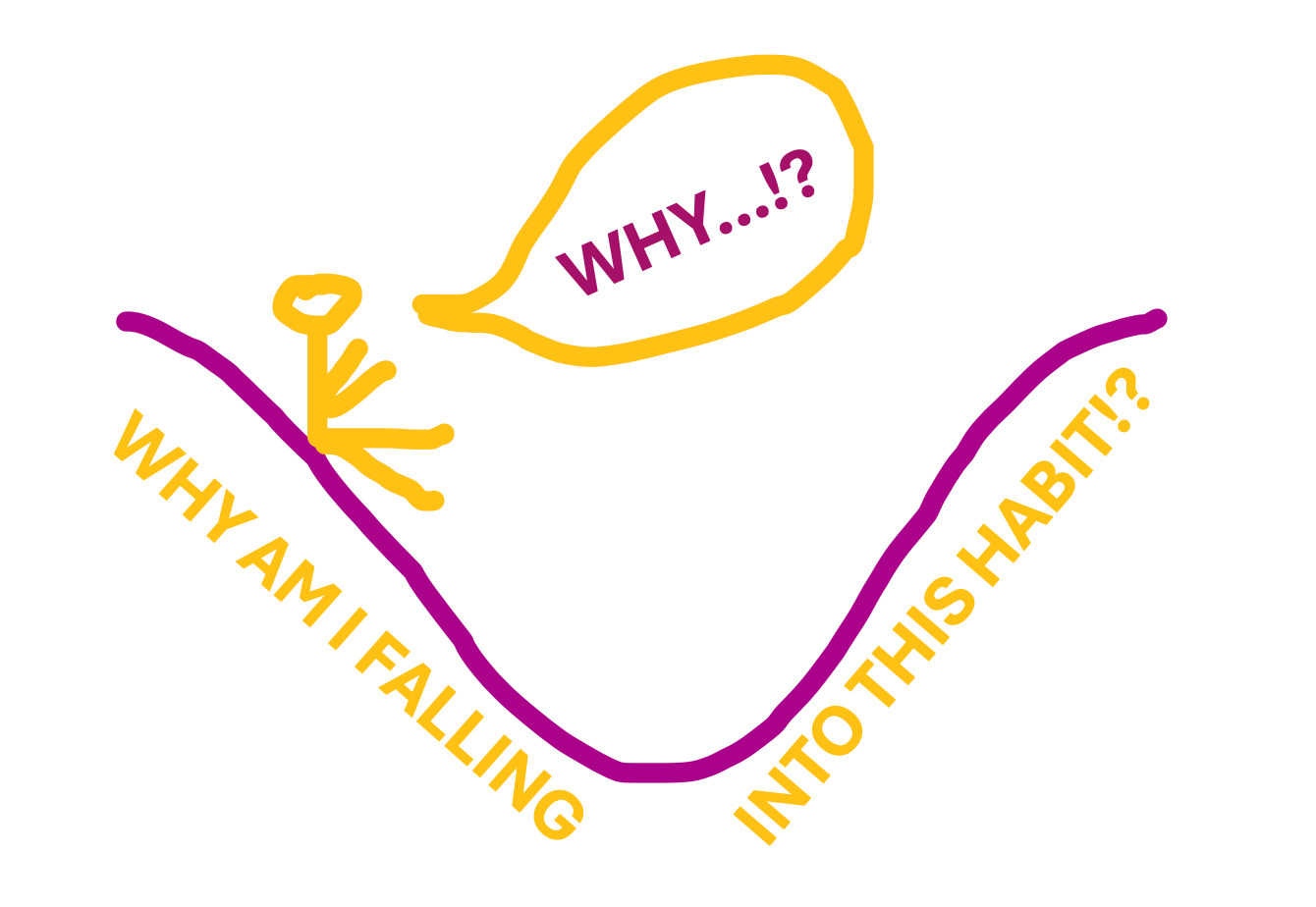
Do you struggle with a stubborn habit? Many of us do.
FIRST, in last post and podcast we reviewed:
WHAT is a habit? I explained four main types:
BEHAVIORAL habits
PHYSIOLOGIC habits
EMOTIONAL habits
RELATIONAL habits
I introduced the concept of “STICKY” to describe the idea that we become grounded in our habits such that they are hard to undo.
Want an audio RECAP?! Listen to Choose Your World PODCAST:
“BAD” HABITS ~ Part 1 ~ WHAT is a habit?
SECOND, in this post we will discuss:
WHY do habits become habits?!
WHY are they so hard to change?!
LET’S SET THE STAGE WITH SOME INTRIGUING QUESTIONS!
*** Have you ever wondered why certain people seem more VULNERABLE to certain types of habits? WHY is that?
*** Have you looked at your own life and seen that there seem to be periods of time when you get STUCK repeating unhealthy choices? WHY then? WHY those choices? WHY can’t you get out of the pattern even when you have thoughts about wanting to change?
*** Does it sometimes seem like the harder you try to change, the more STUBBORN the habit seems to become? WHY is that?
—> Are these coincidences?
—> Are they secondary to external life forces out of our control?
—> Do they suggest something unconscious that is going on in our minds?
—> Are our bodies and minds intertwined in ways we don’t realize and in ways that perpetuate the patterns?
—> Are we modeling other people in our lives?
—> OTHER??
HINT- all answers are correct!
COINCIDENCE-
This is in some ways the most frustrating or disheartening prelude to a habit. In this context, what I mean by “coincidence” is an unintentional development of a pattern. An example might be an unknowing social exposure to a substance and resultant physiologic habituation.
EXTERNAL-
External causation can relate to social or family dynamics, job, school, or financial stress, or the environment. Examples include relational habituation, familial geometry/feedback (a different topic!), balancing stress input with opposite output (conceptually similar to physiologic rebound), and environmental molding. There is A LOT to explain here, but I promise I will break it down in future podcast/workshop!
INTERNAL-
We come to see ourselves and the world around us because of a combination of factors- our development and strength of core attachment (like closeness to mom), how we were raised, the relationships we’ve had, etc. We write narratives about who we are, our best and worst memories, our biggest goals, our greatest fears. Patterns of emotional habituation develop and often require conscious work to shift.
BODY-
Our body learns many things over the course of our lives- this learning can be conscious (like learning how to knit) or unconscious (like learning how to crawl). Regardless of the process, the eventual pattern can become engrained in our body such that we don’t have to think about it (recall looking in the rear view mirror example). This behavioral habituation can be quite strong as it is wired by mind-body connections. Think of it as a super strong scaffolding like the foundation of a house that needs many different materials.
MODELING-
Modeling is super interesting because it relates to all forms of habituation. We will get into the details over workshop as this is a very multidimensional topic and self-relection here can lead to a lot of “aha” moments!
All of these factors come in waves throughout your life. New habits intertwine with old. Some are more “sticky” than others. Some are helpful, some are destructive. Some don’t bother us, yet drive the people around us nuts! More WHY’s to come, along with the big HOW’s of what to do about all this!
THIRD, next time we will dive into the most fun part:
HOW do we change the habits we no longer want?
—> STAY TUNED for the answers!!
Remember, the cool thing about understanding all this is it is EMPOWERING!
My approach-
WHAT —> WHY —> HOW
WHAT are we talking about- set the stage and define the terms.
WHY does the “what” happen and WHY do we care?
HOW do we make positive changes?
Become a CHOICE SEEKER if you are ready to maximize your ability to clarify CHALLENGES, create OPPORTUNITIES, and more authentically CHOOSE YOUR WORLD.